expr:class='"loading" + data:blog.mobileClass'>
Showing posts with label Lesson - 2. Show all posts

Thursday, April 2, 2020

The Holy Trinity or the Triune God, Senior - I, Lesson -2

SENIOR

AGE GROUP: 14 - 15 YEARS

STANDARD (GRADE): IX & X

Permission is granted only for free distribution among Sunday School children.

No part of this document can be modified, sold or used for any commercial purpose.

Click this link and visit devotions blog to read Christian articles

LESSON – 2

THE HOLY TRINITY OR THE TRIUNE GOD 

Christianity is a monotheistic religion which means we worship one God (‘mono’ means one and ‘Theo’ means God). We can understand from the Holy Bible that God has revealed Himself as a Triune God or Trinity. Though the word “Trinity” is not found in the Holy Bible, it is an essential word because it captures the essence of what the Bible teaches about God and prevents erroneous interpretation of the Scripture and heresy. The doctrine of the Trinity is what differentiates Christianity from all other religions and cults. (Click this link to learn more about the counterfeit of the Holy Trinity called the "Satanic Trinity")

The Origin of God:

We come to know about the origin of human race from the Holy Bible through the creation account of Adam and Eve given in the Book of Genesis. However, the origin of the eternal God is not given in the Holy Bible. In Psalms 90: 2 we read, “Before the mountains were brought forth, or ever You had formed the earth and the world, even from everlasting to everlasting, You are God”. In Hebrew Language, the word given for “Everlasting” refers to a time before the existence of time, almost considered as a vanishing point of time. In other words, our human mind is so limited and finite that it cannot understand the beginning and the origin of the infinite God. But we can know about God through His attributes. 

The Attributes of God:

Some of the divine attributes of God are as follows

Eternality - The eternality of God means His existence beyond time, which means God has no beginning or end (Psalm 90:2). The expression "Alpha and Omega" is used as a title of God.

Love - 1 John 4:8;16 says "God is Love." We cannot understand about love apart from God.

Goodness - The goodness of God means that "God is the final standard of good, and all that God is and does is worthy of approval” (Psalm 25:8).

Graciousness – Graciousness of God is a foundational principle of Christianity. Grace is unearned and unmerited favour of God.

Righteousness - The righteousness of God may refer to His holiness, to His justice, or to His saving activity. A notable occurrence of the word is in Romans 1:17 - "for in the gospel the righteousness of God is revealed".

Veracity - The veracity of God means His truth-telling. Titus 1:2 refers to "God, who cannot lie."

Holiness - The holiness of God is that He is separate from sin and incorruptible.

Omnipotence - The omnipotence of God refers to Him being "all powerful". This is often conveyed with the phrase "Almighty".

Omnipresence - The omnipresence of God refers to Him being present everywhere.

Omniscience - The omniscience of God refers to Him being "all knowing".

Transcendence: God's transcendence means that He exists outside of space and time, and therefore eternal and no force within the universe can challenge or change Him.

Sovereignty – Sovereignty tells of God’s divine control over everything that happens. (2) 

What is “Trinity”?

The word “Trinity” is a compound of two words tri and unus. Tri means three and unus means one, thus the word Trinity refers to “one God who perpetually and at the same time co-exists as three persons – the Father, the Son, and the Holy Spirit”. Each person is equally and fully God. Tertullian, one of the earliest Christian theologians from the second century was the first person to use the word “trinitas” to refer to both the unity and plurality of God.

In the Holy Trinity, the term “person” is not used in the same way it is normally used in human beings. Typically, in humans, it means entirely different individuals with separate body, soul and spirit. But in the Godhead, the three Persons are inseparable, interdependent, and eternally united in one Divine Being. Some have opted for the term "subsistence". But the term “persons” is used for want of a better term. 

God the Father: 

The Father is the designer and the architect of everything that is seen and unseen. Eventually, everything is initiated according to the will of the Father. In the Holy Bible it is referred to as the “mystery of his will”. In Ephesians 1:9 we read, “having made known to us the mystery of His will, according to His good pleasure which He purposed in Himself”. At the appointed time, God the Father reveals His will through men and acts he has preordained. From creation to salvation every act was enacted according to the will of the Father, the ultimate author and architect.

God the Son: 
God, the Son is the second person of Trinity. He existed as the Word of God from the beginning with the Father (John 1:1-14; Proverbs 22-36). At the appointed time, He incarnated (took flesh) and was born as a baby in Bethlehem. This is the reason, Jesus Christ is also called as the “Incarnate Word of God”. God, the Son was named “Jesus Christ” when he was born in Bethlehem as a baby. The name “Jesus” means He will deliver the people from their sins and “Christ” means Messiah or the Anointed one. 

The Son, is the means or the agent of creation and salvation. It is through Jesus, that, God created the universe and it is through Jesus Christ that we are saved. So, if the Father’s role is the author and architect of everything, Jesus’ role is the accomplisher or agent by which creation and salvation come (Col 1:16; John1:3; Heb1:2; I Cor 8:6). The will of God the son is in perfect harmony with that of the Father (John 6:38). After his resurrection and ascension to heaven, Jesus Christ is seated at the right hand of the Father, interceding for us and all the angels and authorities and powers are subject to Him. (Acts 7:55; Ephesians 1:20,21; I Peter 3:22).

God the Holy Spirit: 
The Holy Spirit is the “Spirit of God”. The Holy Spirit proceeds from the Father and it is the same Spirit that was within the Son, Jesus Christ (Galatians 4:6). The Holy Spirit performs and brings into completion the acts that are initiated by the Father through his Son, Jesus Christ. It is the Holy Spirit that gave us the breath of life (Genesis 2:7; Job 33:4) and it is he who changes us into the image of Christ, and equips us for ministry. The Holy Spirit is placed as a seal on the believer showing that he or she is part of God’s family and has been appointed for redemption (Ephesians 1:13,14). 

The Holy Spirit also plays a glorious and definite role in the Godhead. The Holy Spirit is not a mere fire, breath or air. He is more than that. Before Jesus left this earth, he promised his disciples that he will not leave them as orphans and he will come to them (John 14:18). Jesus promised to send the comforter, the Holy Spirit to live with the disciples. The Holy Spirit will do the same work which Jesus did when he lived on this earth (John 14:16,17,26; 16:7,8). The promise was fulfilled when the Holy Spirit descended on the Pentecost day.

Symbols of the Holy Trinity
There are many symbols that have been used through out history to represent  the Holy Trinity. Some of them are listed below.
(1) Trinity Knot
(2) Trefoil- Triangle


(3) Three-leaf Clover (Shamrock)
                   

(4) Fleur-de-lis

(5) The Shield of Trinity
           

The Shield of the Trinity, also called as Scutum Fidei in Latin which means Shield of Faith is an ancient symbol for Trinity. It represents many aspects of the doctrine of Trinity detailed in the first part of the Athanasian creed.

Click this link to learn more about the names of the Triune God
Click this link to learn about the Trinity Heresies - wrong doctrines and false claims about Trinity

Memory Verse:  
And without controversy great is the mystery of godliness:
God was manifested in the flesh, Justified in the Spirit,
Seen by angels, Preached among the Gentiles,
Believed on in the world, Received up in glory. (I Timothy 3:16 NKJV) 

Reference:

1.      Holy Bible Reference – Unless otherwise specified all the Scripture references are taken from NKJV.

2.     The Attributes of God. (Retrieved 6th August 2020 from https://www.blueletterbible.org/faq/attributes.cfm)

Click here for the previous lesson - The Holy Bible (God's Priceless Treasure), Senior Lesson - 1


ACTIVITY – SEARCH & FIND

I.      Explain the role of the “Holy Trinity” in

a. Creation (Gen 1:1 – 2:7; Job 33:4; Col 1:16; John 1:3; Heb1:2; I Cor 8:6)

          Role of God the Father         :
          Role of God the Son              :
          Role of God the Holy Spirit  :

b. The birth of Jesus Christ (Luke 1:27 – 35; Philippians 2:6,7; Isaiah 48:16)

          Role of God the Father          :
          Role of God the Son               :
          Role of God the Holy Spirit  :

c. The Baptism of Jesus Christ (Matthew 3:13-17)

         Role of God the Father          :
         Role of God the Son               :
         Role of God the Holy Spirit  :

d. The ministry of Jesus Christ (Luke 4: 1- 21; Acts 10:38; John 17:4, 6,8)

          Role of God the Father          :
          Role of God the Son               :
          Role of God the Holy Spirit  :

e. The death and resurrection of Jesus Christ (Philippian 2:6- 11; Heb 2:10; 9:14)

          Role of God the Father          :
          Role of God the Son               :
          Role of God the Holy Spirit  :

f. The Salvation (Tit 3:4 – 7; Eph 1:3 – 14; 2:12-22; Rom8:16; I Joh 3:24)

          Role of God the Father          :
          Role of God the Son               :
          Role of God the Holy Spirit  :

g. Role of the Trinity in the present age (Mat 6:10; Eph 1:20-23; Rom 8:34; John 16:7 – 14)

          Role of God the Father          :
          Role of God the Son               :
          Role of God the Holy Spirit  :

ASSESSMENT ACTIVITY

I.     Fill in the Blanks:

1. Christianity is a ……………………… religion which means we worship one God

2. The ……………………….. of God refers to him being "all knowing".

3. ……………………. in the second century was the first person to use the word “trinitas”

4. “…………………..” means Messiah or the Anointed one. 


II.     Give short answers:

1. What do we know about the origin of God?


2. What does the word “Trinity” mean?


3. What does “God’s transcendence” mean?


4. What is the role of the Holy Spirit in the Godhead?


III. Give brief answers:

1. Write about the attributes of God. 


The Pentateuch, Intermediate - I, Lesson - 2

INTERMEDIATE

AGE: 12 - 13 YEARS

STANDARD/GRADE: VII & VIII

Permission is granted only for free distribution among Sunday School children.

No part of this document can be modified, sold or used for any commercial purpose.

Click this link and visit devotions blog to read Christian articles

LESSON – 2

THE PENTATEUCH

The first five books of the Old Testament are Genesis, Exodus, Leviticus, Numbers and Deuteronomy. They are also called the “Law Books”, referred throughout the Holy Bible as “The Law of Moses or The Five Books of Moses”. All the five books together are called the Pentateuch. The word Pentateuch is formed from two Greek words penta and teuchos. Penta means five and teuchos meant tool or vessel but later was used to mean a “scroll case book” (1). The Hebrew name for Pentateuch is the “Torah”, which means law. The Pentateuch gives us an account of ancient History and various Laws given to govern the Israelite life. 

A very old Torah Scroll

Author:

Moses is generally considered as the author of Pentateuch. There is no direct information in these books to suggest that Moses wrote them. However, the following clues suggest that Moses was accepted as the author even during Biblical times. (2)

1. Evidence from the rest of the Pentateuch: In the books of the Pentateuch it says that Moses wrote down what God had directed him to write. (Exodus 24:4; Deuteronomy 31:9)

2. Evidence from the rest of the Old Testament: Other books of the Old Testament also give Moses as the author of the Pentateuch (Joshua 8:32; II Chronicles 35:6).

3. Evidence from the New Testament, especially Jesus Christ’s Testimony: (Matthew 19:7, 8; Luke 24:27, 44; John 5:46, 47)

 The Meaning of the Names of these Five Books:

Genesis    - means "Beginning." Genesis tells about the origin of this world, humankind, sin, languages, tribes, cities etc.

Exodus     - means "going out," because it tells about the events that happened before and after the Israelites left Egypt

Leviticus   - means "Relating to the Levites." This book details the roles of Levites, the priestly tribe - their duties, various festivals, sacrifices and rituals.

Numbers   - The Book of Numbers got its name in English from the translation of its Greek name. It gives the census details of the tribes of Israel. In Hebrew it has been given a name which means “In the wilderness”.


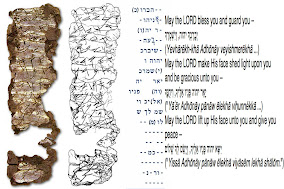
Ancient silver amulets from 600 BC, found at a burial site in Ketef Hinnom in Israel inscribed with the blessings from Numbers 6:24-26, biblicalarchaeology.org

Deuteronomy – It is a word that originated from two Greek words deuteros and nomos meaning "Second Law." It is so called since the Law of God was recollected by Moses for the second time. (3)

The Contents of the Pentateuch:

The time period of Pentateuch ranges from the beginning of the world to the death of Moses just before Joshua led the Israelites into the Promised Land 1406 BC. This indicates that Moses has recorded ancient history that spans around 2760 years. A brief outline of each of the Pentateuch Books is given below 

Book

Content

Genesis

From the time of creation to Israelites’ journey to Egypt

Ø  Creation (Chapters 1, 2)

Ø  The Fall of Man (Chapter 3)

Ø  The Great Flood (Chapter 7 & 8)

Ø  Patriarchs - Abraham, Isaac, and Jacob (Chapters 12-36) The forefathers of Israel, the family line through whom God promised the Saviour as the "Woman’s Seed"

Ø  Joseph’s Life & Israelites’ journey to Egypt (Chapters 37–50)

Exodus

Ø  Israelites in slavery (Chapters 1 – 12)

Ø  Israelites Escape from Slavery

Chapter 12:41- Chapter 19 tells about the journey of Israelites from Egypt to Mount Sinai, a journey of 2 months (Exodus 19:1).

Exodus 19 to Numbers 10 tells about the time when the Israelites camped at the Sinai Desert, where the Ten Commandments and other laws were given.

Leviticus

Ø  Various laws and ordinances for Priests and Levites

Numbers

Ø  Chapters 1-10 (in the Sinai Desert)

Ø  Chapter 14 onwards tells of the wilderness wanderings of the Children of Israel (a period of about 38 years)

Deuteronomy

This book is an oral recitation of history for record sake (Deuteronomy 31:9, 24) and also handing over of charge to the next generation by Moses before his death.

An ancient Torah scroll discovered from a Jewish Synagogue excavated in the Biblical Town of En-Gedi

The ancient Jewish Synagogue in En-Gedi where the scroll was found

The Law – A Shadow of the things to come:

According to Colossians 2:17 and Hebrews 10:1, the Law given in the Old Testament was a shadow of things to come, but the reality was fulfilled in Christ Jesus. What do we mean by this? If we see a shadow, we understand that there must be a real object nearby. In the same way, what was recorded in the Old Testament was the shadow of the real things that were going to be fulfilled in the New Testament. (Click this link to learn more bout the Law of Moses and its fulfillment in Jesus Christ)

For Example: The Passover Lamb that was sacrificed in the Old Testament was a shadow of Jesus Christ, the Lamb of God who was going to be sacrificed for the sins of the entire world. By understanding the Old Testament, we will be able to comprehend the New Testament better. (Click this link to learn more about the Passover Lamb and its New Testament reality)

MEMORY VERSE: But now we have been delivered from the law, ………………………..  “You shall not covet.” (Romans 7:6, 7 NKJV)

Book Reference:

(1)           Random House Kernerman Webster's College Dictionary, © 2010 K Dictionaries Ltd. Copyright 2005, 1997, 1991 by Random House, Inc. All rights reserved.

(2)           About the first five books. (Retrieved 5th August 2020 from https://whataboutjesus.com/study-bible/book-by-book/bible-introduction/about-the-first-five-books/)

(3)           Fleming, D. Entry for 'Deuteronomy'. Bridgeway Bible Dictionary. https://www.studylight.org/dictionaries/bbd/d/deuteronomy.html. 2004.


ASSESSMENT ACTIVITIES

Fill in the blanks:

1. The Hebrew name for Pentateuch is the “…………………”

2. The Pentateuch is a ……………………. book made up of History and Law.

3. In the Pentateuch, Moses wrote about events covering almost ……………….. years.

4. The ……………………………… that was sacrificed in the Old Testament was a shadow of Jesus Christ, the Lamb of God.

Give short answers:

1. What does the word ‘Pentateuch’ mean?


2. Who is the author of Pentateuch?


3. What does the Deuteronomy book contain?


4. What does it mean when we say “the Law is a shadow of the things to come!”?


Answer in brief:

1. Give the meaning of the names of the five Pentateuch books and a brief explanation of the books.